 Skip to content


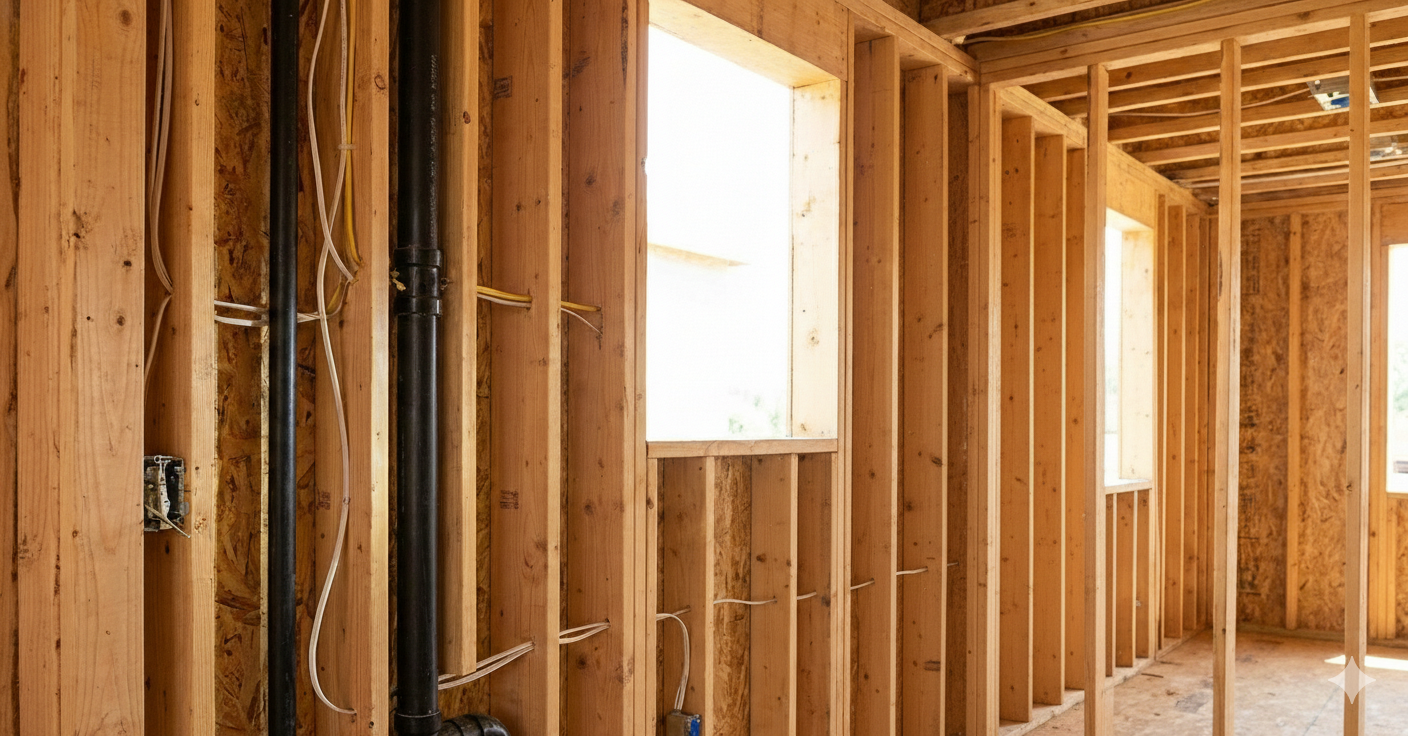
A pre-drywall inspection examines your home’s structural framing, electrical wiring, plumbing, and HVAC systems after installation but before drywall covers them permanently. This inspection typically costs $300-$400, takes 1-2 hours, and identifies construction defects while they’re still easy and inexpensive to fix. Inspectors check that framing is properly aligned, electrical systems are safely wired and grounded, plumbing has correct slopes and no leaks, and everything meets local building codes before these critical systems disappear behind walls.
What Happens When Drywall Goes Up
Once your builder hangs drywall, you’re placing a lot of trust in work you’ll never see again. That’s not necessarily a problem if everything’s done right, but construction mistakes happen more often than most people realize. A wire nicked during installation, a plumbing fitting that wasn’t quite tight enough, or framing that’s slightly out of square can all create serious headaches down the road.
The thing is, these issues are relatively simple to spot and fix when the walls are still open. After drywall installation, though? You’re looking at cutting into finished walls, patching, repainting, and potentially dealing with damage to other systems in the process. What might have been a 20-minute fix becomes a multi-day ordeal. That’s exactly why smart buyers and even some builders bring in an independent inspector before the drywall crew arrives.
Why This Inspection Matters More Than You Think
Municipal inspectors do visit construction sites, and yes, they check things. But here’s what most people don’t realize about those visits. Code inspectors are primarily focused on life safety issues and basic code compliance. They’re often covering multiple job sites in a day, working from checklists, and they’re not there to protect your interests specifically. A pre-drywall inspector in Newtown Square that you hire directly works for you. The inspection is more thorough, more detailed, and results in a comprehensive report with photographs documenting everything behind your walls.
Years from now, when you need to know where a specific wire runs or how your plumbing was routed, you’ll have that documentation. The cost difference between fixing problems now versus later is substantial. Correcting a wiring issue before drywall might cost $50 in materials and an hour of labor. The same fix after drywall could easily run $500 or more once you factor in cutting, repair, and refinishing.
Understanding What a Pre-Drywall Inspection Consists Of
When people search for what does a pre-drywall inspection consist of, they want to know exactly what gets examined. The inspection covers four major categories: structural elements like framing, floor joists, and roof trusses; electrical systems including wiring, junction boxes, and grounding; plumbing components such as supply lines, drains, and venting; and HVAC installations covering ductwork and condensate lines. Additionally, inspectors evaluate insulation placement, moisture barriers, fire-blocking, and window and door installations. Each component gets photographed and documented in a detailed report you can reference for years to come.
Inquire about home inspection services
Looking for a reliable home inspection service in Newtown Square, West Chester, Paoli, and nearby areas? Look no further than Batten to Beam! I conduct a thorough evaluation of specific areas such as foundations inspections, termites inspections, radon inspections, or sewer lateral inspections. Trust Batten to Beam for your home inspection needs
The Structural Framework Gets a Close Look
Your inspector starts with the bones of the house. Framing might seem straightforward, but there’s plenty that can go wrong. Studs need to be spaced correctly, typically 16 inches on center for walls. When studs are too far apart or improperly secured, you end up with walls that flex and drywall that cracks. Headers over windows and doors carry significant loads, and they need to be sized appropriately for their spans.
An undersized header can sag over time, leading to doors that won’t close properly and cracks in walls above openings. Floor joists and roof trusses get examined for proper spacing, adequate support, and correct installation of joist hangers. These metal connectors are critical for structural integrity, but they’re frequently installed incorrectly. Missing nails, wrong nail types, or hangers that aren’t fully seated can compromise the connection. The inspector also checks for proper blocking and bracing. Fire-blocking at certain wall and floor intersections isn’t just a code requirement, it’s genuinely important for slowing fire spread.
Electrical Systems Under Scrutiny
Electrical rough-in is where a lot of issues hide. Your inspector examines how wires are routed through framing members. When electrical cables pass through studs, they need protection. If a wire runs too close to the edge of a stud, there should be a metal nail plate protecting it.
Without this protection, drywall screws can puncture the wire, creating a serious safety hazard. Junction boxes need to be accessible and properly secured. You’d be surprised how often boxes are left loose or positioned where they’ll be covered by drywall. The inspector verifies that boxes are mounted solidly and positioned correctly for the planned wall finish depth. Wire connections get checked where visible. Loose wire nuts, exposed copper, or wires that aren’t properly secured in boxes are all problems that need correction.
The inspector also looks at whether the right wire gauge is being used for the circuit amperage. Grounding and bonding are critical for safety. The inspector verifies that ground wires are properly connected and that metal boxes are bonded correctly.
Plumbing and HVAC Systems
Water supply lines and drain pipes need to be installed with precision. For drains, proper slope is everything. Too flat and water won’t flow correctly, leading to clogs. The standard is typically one-quarter inch of drop per foot of horizontal run, and inspectors verify this with levels. Supply lines need adequate support. Pipes that aren’t properly secured will vibrate and bang when water flows, creating that annoying water hammer effect.
Every joint and connection gets visual examination for signs of leaks or poor workmanship. Vent stacks are another critical component that often gets shortchanged. Every plumbing fixture needs proper venting for drainage to work correctly and to prevent sewer gases from entering your home. For HVAC, ductwork quality varies wildly between installations. The inspector examines whether ducts are properly sized for the system and space they’re serving. Connections between duct sections should be sealed with mastic or approved tape. Leaky ductwork in unconditioned spaces wastes tremendous amounts of energy.
If you’re searching for a pre drywall inspection near Delaware County area, Batten to Beam provides thorough inspections throughout Newtown Square, West Chester, Phoenixville, and surrounding communities. You can reach Richard Graff at (484) 573-7078 to schedule an inspection while your walls are still open.
Insulation, Windows, and Other Critical Items
If insulation is already installed when the inspection occurs, the inspector evaluates coverage and quality. Gaps in insulation create cold spots, condensation potential, and higher energy bills. Proper installation means insulation fills cavities completely without compression or gaps. Air sealing around penetrations is increasingly recognized as critical for energy efficiency and moisture control.
The inspector looks for gaps around pipes, wires, and ducts where air can leak between conditioned and unconditioned spaces. Even though windows and doors are installed before drywall, they’re part of the inspection. The inspector checks that windows are level, properly shimmed, and securely fastened. Window flashing is particularly important because it’s the primary defense against water intrusion, yet it’s commonly installed incorrectly.
What the Report Tells You
After the inspection, you’ll receive a detailed report documenting findings with photographs. This isn’t just a pass/fail document. Good reports explain what was found, why it matters, and what needs to happen to correct any deficiencies. The photos serve dual purposes. First, they document problems that need fixing.
Second, they create a permanent record of what’s behind your walls. This can be invaluable years later when you need to know where wiring or plumbing runs for renovation work. Most inspections identify at least some items needing correction. That doesn’t mean your builder is incompetent. It means construction is complex and an extra set of trained eyes catches details that get missed in the daily workflow.
Timing and Cost Considerations
Schedule the inspection after rough-in work is complete but before insulation if possible. If insulation is already in, the inspection is still worthwhile but won’t be quite as comprehensive. Coordinate with your builder so the inspector has access when needed. A pre-drywall inspection typically runs $300-$400 for an average-sized home. That’s a fraction of what you’d spend correcting even minor issues after walls are closed.
Consider this scenario: an inspector finds that several electrical boxes are mounted loosely and three are missing the required nail plates over wires. Fixing this takes an electrician maybe two hours before drywall. After drywall, you’re looking at cutting into walls in multiple locations, making repairs, patching, texturing, and painting. Easily a $1,500 repair. The inspection also provides negotiating leverage. If significant issues are found, you have documentation to require corrections before making final payments or closing on the home.
Common Issues Found During Inspections
Some problems show up repeatedly in pre-drywall inspections. Improperly installed joist hangers rank high on the list. These critical connectors often have missing nails or incorrect nail types used. Electrical boxes installed at wrong depths for the planned drywall thickness create problems during finish work.
Plumbing vents that are undersized or improperly routed affect drainage performance. Missing fire-blocking at wall and floor intersections is extremely common. Foundation issues sometimes become apparent during framing that weren’t obvious earlier. Cracks, moisture intrusion, or grade problems might show effects once walls are framed.
Working With Your Builder After the Inspection
Most builders have their work inspected by municipal inspectors, and many are initially resistant to additional third-party review. Approach this diplomatically. You’re not questioning their competence; you’re ensuring quality through verification. Professional builders often welcome thorough inspections because it provides documentation that work was done correctly. When the inspection identifies problems, work with your builder to address them before proceeding.
The inspection report gives you both a clear roadmap of what needs attention. For homeowners in the Delaware County area building new or adding on, Batten to Beam offers independent pre-drywall inspections that protect your investment. Richard Graff brings certified expertise to every inspection, providing detailed documentation of your home’s hidden systems. Call (484) 573-7078 to discuss your project and schedule an inspection.
Frequently Asked Questions
Is a pre-drywall inspection required when building a new home?
Pre-drywall inspections are not legally required, but they’re strongly recommended. Municipal building inspectors do visit construction sites to verify code compliance, but these inspections are typically brief and focused on minimum safety standards. A private pre-drywall inspection you hire is more thorough, works specifically for your interests, and provides detailed photographic documentation that you’ll own permanently.
What’s the difference between a pre-drywall inspection and a municipal building inspection?
Municipal inspectors focus primarily on code compliance and life safety issues. They’re covering multiple job sites daily, working from checklists, and ensuring minimum standards are met. A private pre-drywall inspector works exclusively for you, spends more time on your property, examines systems more thoroughly, and provides a detailed report with extensive photographs.
Can I attend my pre-drywall inspection?
Yes, and it’s actually a good idea to attend if your schedule allows. Walking through with the inspector helps you understand your home’s systems, gives you a chance to ask questions in real-time, and lets you see potential issues firsthand before they’re explained in the report.
What are the most common problems found during pre-drywall inspections?
The most frequent issues include improperly installed joist hangers (missing nails or wrong nail types), electrical wiring problems (loose connections, missing nail plates over wires, incorrect grounding), plumbing with improper slopes on drain lines, missing or inadequate fire-blocking, HVAC ductwork that’s kinked or poorly sealed, and windows without proper flashing. Many of these problems are easy and inexpensive to fix before drywall but become major headaches requiring wall demolition if discovered later.
What happens if the inspection finds problems with my new construction?
If issues are identified, you’ll receive a detailed report documenting the problems with photographs. You then share this report with your builder and work together to address the deficiencies before drywall installation proceeds. Most builders are professional about making necessary corrections, especially when issues are clearly documented.
Do I really need a pre-drywall inspection if I trust my builder?
Even with an excellent builder, a pre-drywall inspection provides value. Construction involves numerous subcontractors, and even experienced professionals occasionally miss details in the complexity of building a home. Think of it as verification rather than distrust.
